

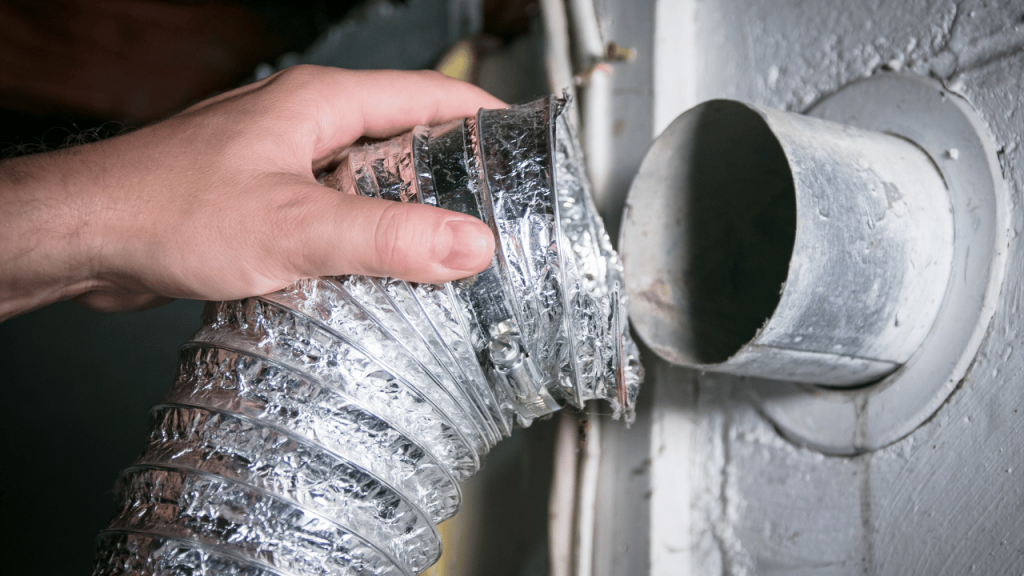
Dryer vent rerouting helps your dryer work the way it should. Many homes have vent lines that run too long or bend too much. Over time, lint builds up inside those vents. Air stops flowing the right way. Clothes take longer to dry. The dryer heats up more than it should.
Dryer vent rerouting fixes this problem by changing the vent path. It creates a shorter and safer route for hot air to leave your home. This improves airflow and helps your dryer run better. It also lowers the risk of lint buildup and heat problems.
In older homes, vent lines often run through walls, attics, or crawl spaces. These setups were common years ago but do not meet today’s safety needs. Dryer vent rerouting brings those systems up to standard. It protects your home, improves drying time, and helps your dryer last longer.
In this blog post we will explain how dryer vent rerouting works and why it matters for your home.
What Is Dryer Vent Rerouting?
Dryer vent rerouting means changing the path your dryer vent follows to reach the outside of your home. Instead of air moving through a long or twisted route, the vent gets a shorter and safer direction. This allows hot air and moisture to exit faster and more smoothly.
Many homes have vent lines that run through walls, attics, or crawl spaces. Some vents have sharp turns or flexible materials that trap lint. Dryer vent rerouting corrects these issues by redesigning the vent layout. The goal is to reduce bends, shorten the distance, and use proper vent materials.
During dryer vent rerouting, professionals remove unsafe sections and create a direct path to the exterior. This improves airflow and helps the dryer work with less strain. It also lowers heat buildup inside the vent. Over time, this makes drying faster and helps protect your home from avoidable risks.
How a Dryer Vent Is Normally Installed
A dryer vent usually starts at the back of the dryer. It connects to a vent pipe that carries hot air outside. In many homes, the installer runs this pipe through a wall, ceiling, or floor. The vent then exits through an exterior wall or roof.
Older installations often focus on convenience instead of airflow. The vent may run long distances to reach the outside. It may bend several times to avoid framing or plumbing. Some setups use flexible or thin vent materials. These materials trap lint and slow down air movement.
Over time, these vent paths become a problem. Lint sticks to the inside of the duct. Moist air stays trapped longer. The dryer works harder to push air out. This is where dryer vent rerouting becomes important. It corrects poor layouts and brings the vent system in line with safer standards.
Why Dryer Vent Rerouting Matters

Dryer vent rerouting plays a big role in how safe and efficient your dryer is. When the vent path works against airflow, the dryer struggles to do its job. Heat, lint, and moisture stay trapped longer than they should. Rerouting fixes the layout so air moves freely and exits the home the right way. This protects both your appliance and your living space.
Improves Dryer Performance
Good airflow helps a dryer work at its best. When the vent path stays short and direct, hot air moves out faster. Clothes dry more evenly and in less time. The dryer does not need to run multiple cycles. With dryer vent rerouting, the machine puts in less effort to push air out. This reduces strain on internal parts and keeps performance steady over time.
Reduces Fire Hazards
Lint builds up quickly inside long or twisted vent lines. When airflow slows down, heat rises inside the duct. This creates a serious fire risk. Improper vent paths make it easier for lint to collect and harder for heat to escape. Dryer vent rerouting removes problem sections and creates a safer exit for hot air. This lowers the chance of overheating and helps protect your home.
Helps Prevent Moisture and Mold Issues
Dryers release a lot of warm, moist air. If that air does not exit properly, moisture settles inside walls, ceilings, or crawl spaces. Over time, this leads to condensation and mold growth. Dryer vent rerouting sends moisture straight outside. This helps keep indoor air dry and reduces the risk of mold-related problems.
Lowers Energy and Repair Costs
A dryer that runs longer uses more energy. Poor vent paths also cause parts to wear out faster. Dryer vent rerouting improves efficiency from day one. Drying cycles shorten and energy use drops. The dryer stays under less stress, which means fewer repairs and a longer lifespan. Over time, these savings add up and make rerouting a smart long-term choice.
Common Dryer Vent Routing Problems Found in Homes
Many dryer vent issues come from the way the vent was installed years ago. Builders often worked around walls and framing instead of airflow. Over time, these shortcuts cause performance and safety problems. Dryer vent rerouting corrects these common mistakes and brings the system up to safer standards.
Here are some of the most common dryer vent routing problems:
Vent Is Too Long or Has Too Many Turns
Long vent lines slow down airflow. Every extra turn makes it harder for hot air to escape. Lint settles inside these bends and builds up faster. The dryer then works longer to dry clothes. Dryer vent rerouting shortens the path and reduces turns. This allows air to move freely and improves overall performance.
Vent Terminates Indoors Instead of Outside
Some vents release air into attics, garages, or crawl spaces. This setup traps heat and moisture inside the home. Lint spreads into hidden areas and creates fire and air quality risks. Dryer vent rerouting ensures the vent exits outdoors where it belongs. This keeps moisture and lint out of living spaces.
Flexible or Plastic Vent Materials
Flexible and plastic ducts may seem easy to install, but they cause major problems. These materials sag over time and catch lint along the inside walls. Heat builds up quickly in these vents. Dryer vent rerouting replaces unsafe materials with proper metal ducting. This improves airflow and reduces fire risk.
Poor or Unsafe Exterior Vent Location
Some exterior vents sit too close to the ground or near walkways. Others point toward walls or stay blocked by debris. These locations restrict airflow and allow lint to collect outside the vent. Dryer vent rerouting places the exit in a clear and safe spot. This helps air escape properly and keeps the vent working as intended.
How Dryer Vent Rerouting Works
Dryer vent rerouting follows a clear and careful process. The goal stays simple. Create a safer path for hot air to leave the home. The work focuses on airflow, safety, and long-term performance. Each step helps remove problems caused by poor vent layouts.
Inspecting the Existing Vent Path
The first step looks at how the vent currently runs. This includes checking the length, turns, and materials used. Technicians also look for lint buildup and blocked sections. This inspection helps identify where airflow slows down. It also shows which parts of the vent create safety risks. Dryer vent rerouting starts with understanding what needs to change.
Designing a Shorter, Safer Route
Once the issues are clear, a new vent path gets planned. The goal is to make the route as direct as possible. Fewer turns allow air to move faster. A shorter path reduces lint buildup and heat. Dryer vent rerouting focuses on choosing the safest exit point and avoiding hidden spaces where problems can form.
Installing Proper Vent Materials
After planning, unsafe duct sections get removed. These often include plastic or flexible hoses. They get replaced with solid metal venting that holds its shape. Proper materials improve airflow and resist lint buildup. Dryer vent rerouting relies on these materials to keep the system safe and durable.
Testing Airflow After Rerouting
Once installation finishes, airflow gets tested. Strong airflow shows that hot air exits the home correctly. The dryer runs more efficiently and dries clothes faster. This final step confirms that dryer vent rerouting solved the original problems and improved overall performance.
Final Thoughts
Dryer vent rerouting is not just a layout change. It improves safety, airflow, and daily performance. A properly routed vent helps hot air leave your home faster. It lowers lint buildup and reduces heat stress on your dryer. Over time, this protects your appliance and your home.
AAA Air Duct Cleaning helps homeowners fix unsafe and inefficient dryer vent systems. Our team inspects the full vent path and identifies problem areas. We remove poor materials, shorten long routes, and create a safer exit for airflow. Every dryer vent rerouting service focuses on performance, safety, and long-term reliability.
We use proper metal ducting and follow current safety standards. Our goal is to help your dryer run better while reducing fire and moisture risks. If your dryer takes too long to dry clothes or your vent system feels outdated, professional dryer vent rerouting can make a real difference.
AAA Air Duct Cleaning is here to help keep your home safer and your dryer working the right way.




